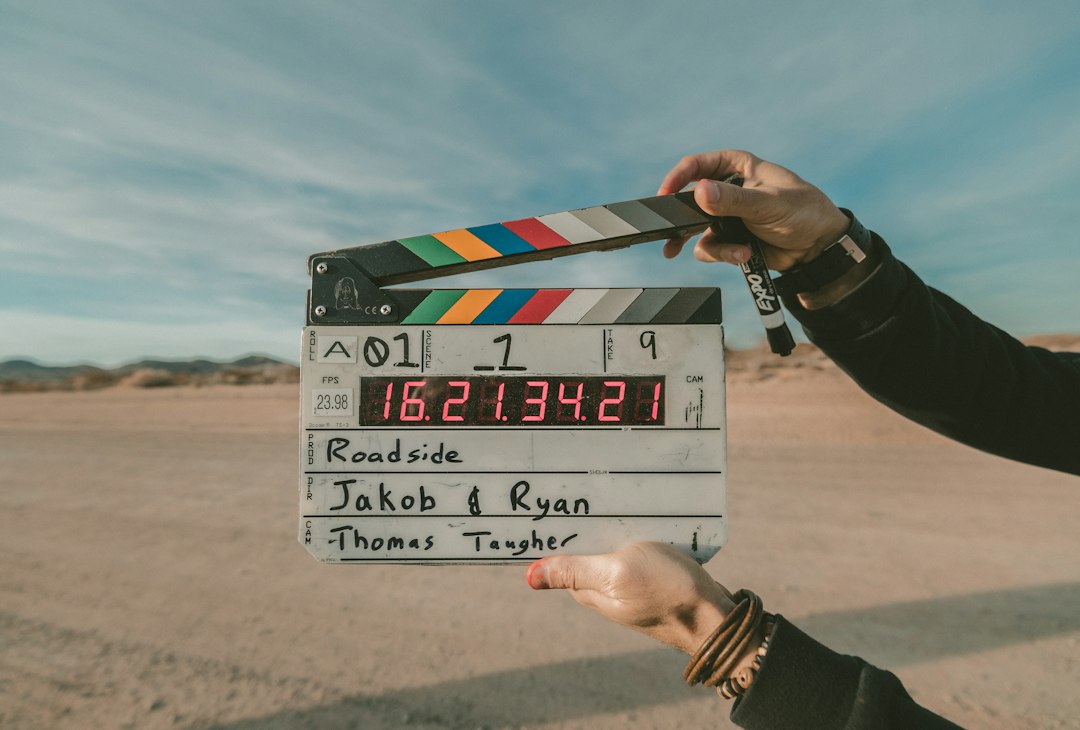
Photo by Jakob Owens on Unsplash
Why Characters Cross Behind Each Other Mid-Scene
Watch a conversation scene closely and you might notice something subtle: one character walks behind another, switching their position on screen. What seems like casual movement is actually a deliberate technique that lets filmmakers reposition their actors without confusing the audience about who’s standing where.
The invisible geography problem
Film grammar depends on consistent spatial relationships. If two characters are talking and one stands on the left side of the frame, the audience expects them to stay there unless something changes. Suddenly flipping their positions between cuts without explanation creates a jarring moment where viewers have to reorient themselves, breaking the illusion.
But scenes need flexibility. A conversation that begins at a doorway might need to migrate across a room. An argument might require actors to circle each other. A character who starts sitting might stand and move. Filmmakers can’t lock actors into fixed positions for an entire scene, yet they also can’t randomly rearrange them between shots.
The crossing maneuver
The solution is to show the repositioning happen. When one character needs to end up on the opposite side of the frame, they physically cross behind or in front of the other character while the camera is rolling. This visible movement gives the audience permission to update their mental map of the space.
The technique works because it respects how we process spatial information. In real life, if someone walks around you during a conversation, you track that movement and update where you expect them to be. Film replicates this by showing the cross, then cutting to a new angle that reflects the updated positions. The transition feels natural because we witnessed the change.
Hiding the transition
Skilled directors make these crosses feel motivated rather than mechanical. A character might cross to look out a window, retrieve a drink, or move toward a door. The blocking serves the scene’s emotional needs while accomplishing the technical goal of repositioning.
The camera often facilitates the illusion through movement of its own. A slow pan or dolly that follows one character’s cross helps sell the geography. By the time the camera settles into its new position, the audience has subconsciously accepted the updated spatial arrangement.
Lighting and staging can emphasize or downplay the cross depending on what the scene needs. A dramatic cross might be lit and framed to draw attention, making it a power move within the scene’s dynamics. A utilitarian cross might happen in the background or during a moment when dialogue pulls focus elsewhere.
When filmmakers skip it
Not every scene requires this precision. Wide masters that keep both characters in frame simultaneously allow for more freedom since the audience can always see everyone’s relative position. Highly stylized films or deliberately disorienting sequences might violate spatial continuity for effect.
Modern coverage-heavy shooting sometimes works around the issue by capturing so many angles that editors can construct the scene without worrying about line-crossing. If you never cut to a reverse that reveals the “wrong” positioning, the problem never emerges.
The edit that completes the geography
The cross only succeeds if the edit supports it. Cutting away too quickly after a cross leaves the audience uncertain whether to register the new positions. Holding too long makes the repositioning feel staged. The ideal cut comes just after the movement completes, giving viewers a beat to process the change before continuing the scene.
This coordination between blocking and editing reflects how much filmmaking depends on tiny decisions that viewers never consciously notice. Characters crossing behind each other mid-conversation might seem unremarkable, but it’s part of the invisible architecture that keeps film’s spatial storytelling coherent.