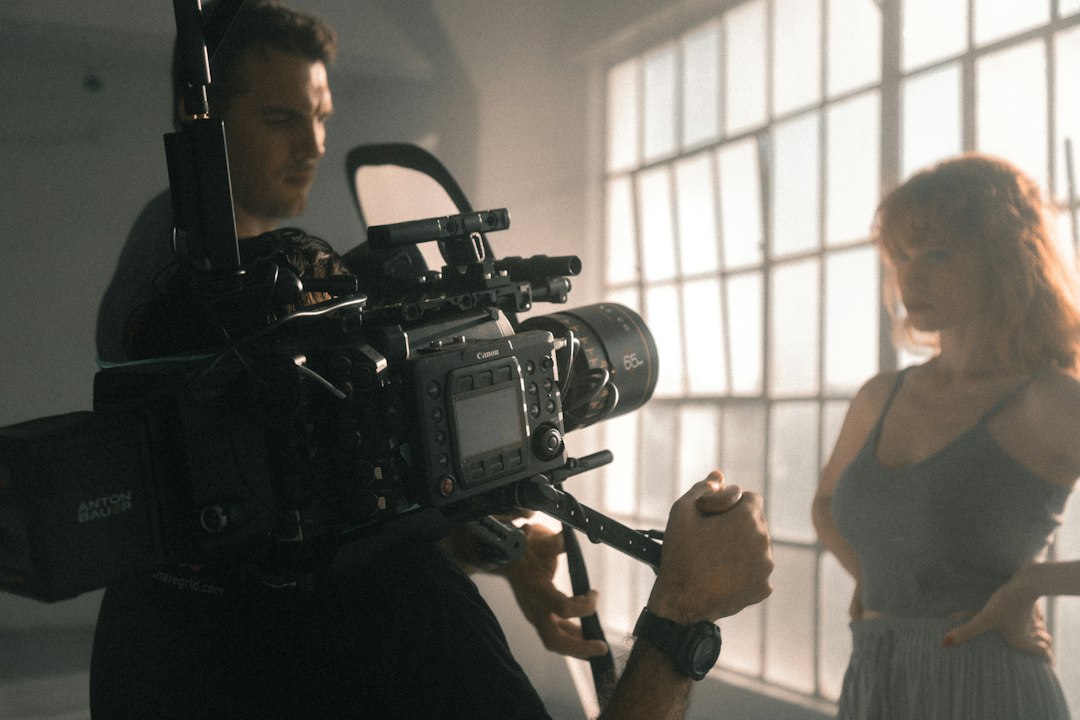
Photo by Jakob Owens on Unsplash
Clean Single: Why Directors Shoot Characters Alone in Group Scenes
When a director calls for a “clean single,” they’re asking the camera crew to frame just one person, isolated from everyone else in the scene. No shoulders creeping into the edge of frame, no blurred faces in the background—just the character, alone in the shot. It sounds simple, but this coverage staple gives editors crucial flexibility and shapes how audiences connect with individual characters in crowded moments.
What Makes a Single “Clean”
A single is any shot focused on one person. A clean single takes it further by removing all visual evidence of other characters. If you’re filming a dinner conversation with four people, a clean single of one character shows only that person, even though they’re sitting at a table with three others. The other diners are present in the scene’s geography and in the actor’s eyeline, but the camera has repositioned or adjusted framing to exclude them from the shot entirely.
This differs from a dirty single (also called an OTS, or over-the-shoulder shot), where part of another character—usually a shoulder or the back of a head—remains visible in the foreground. Both are useful, but they serve different purposes.
Why Shoot Clean
The practical reason is editorial insurance. A clean single gives the editor the freedom to cut to a character at any moment without worrying about continuity problems with the other people in frame. If an actor in the foreground of a dirty single moved their hand at the wrong time or turned their head inconsistently between takes, those errors become visible every time you cut to that angle. Clean singles eliminate that problem entirely.
Clean singles also intensify focus. When you’re watching a character react, decide, or reveal something emotionally critical, the absence of other faces removes competition for your attention. The frame becomes a private moment between that character and the audience, even in a room full of people. Directors use this isolation to mark turning points, realizations, or moments when a character feels alone despite being surrounded by others.
The Coverage Dance
Shooting clean singles requires repositioning the camera for each character in a scene. A four-person conversation might require four clean singles, four dirty singles, a wide shot, and possibly two-shots of various pairings. This is why dialogue scenes take time to capture—the camera moves, lighting adjusts, and actors repeat the scene from multiple setups.
Actors often perform the full scene for each camera angle, even if their face won’t appear in that particular shot. They’re present off-camera to give their scene partner the right eyeline and timing. An editor might use only ten seconds of a two-minute clean single, but having the entire scene covered from that angle means the performance can breathe across the edit.
When Directors Skip Them
Not every scene needs clean singles. Wide ensemble shots or scenes emphasizing group dynamics over individual interiority sometimes work better without them. Some directors deliberately avoid clean singles to maintain a sense of crowding or social context—keeping characters always visible in relation to others rather than granting them isolated frames.
But in dialogue-heavy scenes, courtroom confrontations, family dinners, or any moment where individual reactions matter as much as the conversation itself, clean singles are the backbone of coverage. They give editors the raw material to build rhythm, control pacing, and ensure that when a character’s face needs to fill the screen, nothing else intrudes.
The term itself is straightforward—a clean single is simply a single shot, kept clean of other characters. But that cleanliness is a choice, one that creates space for a character to exist alone in the frame, even when they’re never alone in the room.