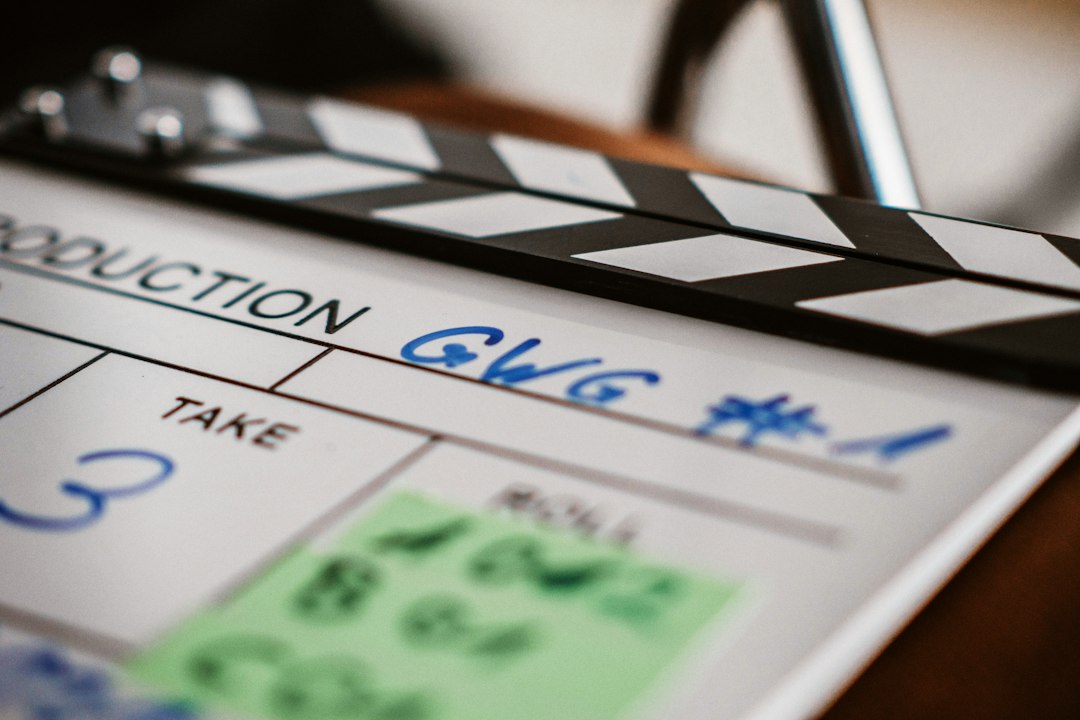
Photo by Leuchtturm Entertainment on Unsplash
Why Film Sets Use Clapperboards in the Digital Age
The clapperboard—that black-and-white striped hinged board snapped in front of the camera—feels like a relic from Hollywood’s mechanical past. Yet walk onto nearly any professional film set today, from micro-budget indies to tentpole blockbusters, and you’ll still see a camera assistant holding one at the start of each take. The persistence of this analog tool in an era of digital cameras and cloud-based workflows isn’t nostalgia. It’s necessity.
The Sync Problem Digital Cameras Didn’t Solve
The clapperboard was invented to solve a fundamental problem: film cameras and audio recorders ran as separate machines, and editors needed a clear reference point to align picture and sound. The sharp clap created a visible frame where the sticks met and an audible spike in the audio waveform—an unmistakable sync point.
Digital cameras eliminated film stock, but they didn’t eliminate the problem. Professional productions still record audio separately using dedicated field recorders or mixing consoles. The camera’s onboard microphones are usually inadequate for final audio, so boom operators and sound mixers capture dialogue and ambience on external devices. Every take still generates separate picture and sound files that must be synchronized in post-production. The clap remains the fastest, most foolproof method to align them. Even with timecode—an electronic sync method that embeds matching timestamps in both camera and audio files—the clap provides a visual and audible confirmation that everything is working correctly.
The Slate as Production Database
The information written on the slate serves as embedded metadata for every shot. Scene number, take number, camera roll, date, production title, director, and cinematographer all appear on the board, visible in the first frames of each clip. This turns every file into a self-documenting asset.
In post-production, editors and assistants may work with hundreds or thousands of clips. A clearly marked slate allows them to identify a shot instantly without cross-referencing spreadsheets or relying on inconsistent file-naming conventions. If a director calls for “Scene 42, Take 5” six months into editing, the slate provides a searchable visual index. Cloud-based dailies systems can even use OCR to automatically tag clips based on slate information.
Communication Across Departments
The tail slate—when the board is held upside down and clapped at the end of a take—signals that the camera started rolling before the actors were in position or before a slate could be safely placed in frame. It tells the editor that sync and identifying information exist, just in a non-standard location.
Smart slates with embedded timecode displays communicate technical sync data to post. Color-checker charts on some slates give colorists a neutral reference for matching footage across multiple cameras or lighting setups. Even the simple act of writing a new take number confirms to the entire crew that the previous take is complete and a new attempt is beginning.
Why Apps and Metadata Haven’t Replaced It
Several digital slate apps exist, and some productions use them. But the physical clapperboard persists because it’s visible to everyone on set simultaneously—director, script supervisor, continuity, camera operators, and actors all see the same take number at the same moment. It requires no battery, no software updates, no network connection. It’s legible in bright sunlight and low light. And the clap itself provides a sharp transient that cuts through background noise in a way that electronic beeps often can’t.
The clapperboard is a rare example of analog technology that digital workflows absorbed rather than replaced. It adapted by adding timecode displays and QR codes while retaining its core function: creating an unmistakable point of reference that connects image, sound, and production metadata in a single moment. As long as picture and sound are captured separately, the clap will remain the most efficient bridge between them.