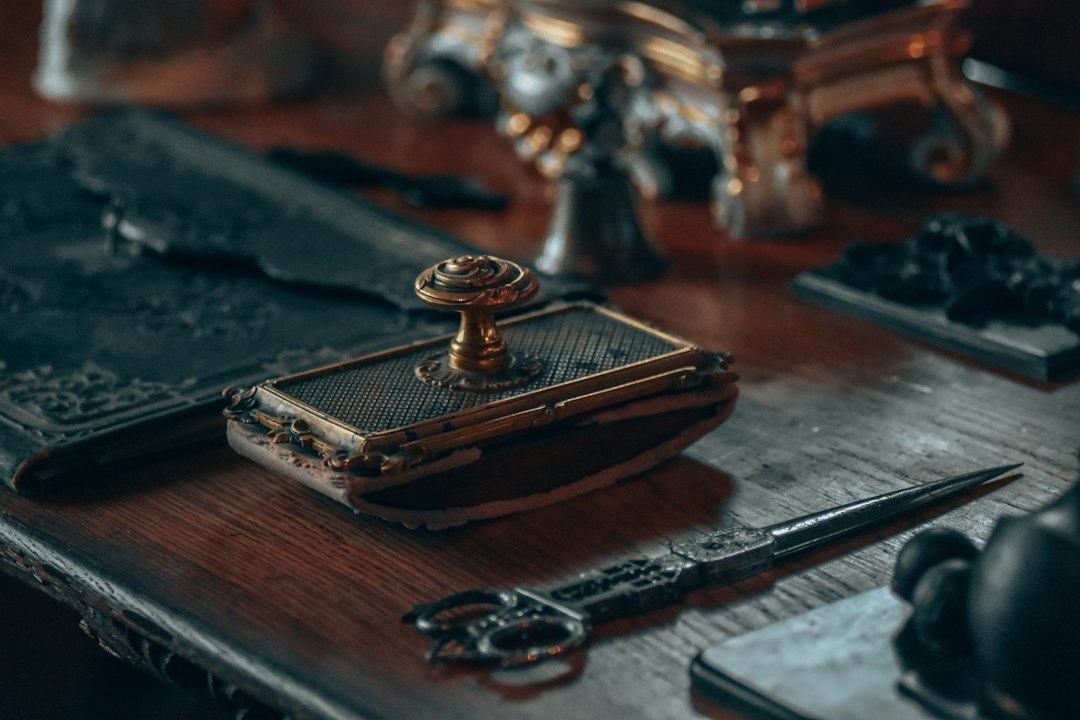
Photo by Leon Kohle on Unsplash
Chekhov's Gun: The Rule That Makes Every Detail Earn Its Place
You’ve felt it before: a character mentions an odd object in passing, or the camera lingers a beat too long on something in the background, and some part of your brain quietly files it away. Twenty minutes later, that object comes back and pays off. That’s Chekhov’s Gun in action, and it’s one of the oldest, most useful ideas in storytelling.
Where the Idea Comes From
The principle is named after the Russian playwright Anton Chekhov, who argued in his letters that a story shouldn’t include details that don’t matter. If you show a loaded rifle hanging on the wall in act one, it needs to go off by the end. The idea isn’t really about guns specifically. It’s about narrative economy: everything the audience is asked to notice should be doing work. A story that’s full of unfired guns feels cluttered and untrustworthy, because the audience learns it can’t tell the difference between a clue and a decoration.
Film adopted this principle wholesale, partly because visual media makes it so much easier to plant something. A novel has to describe an object; a film just has to point a lens at it. That efficiency is a gift and a trap. Every prop, every line of dialogue, every shot composition is a choice, and audiences are extremely good at sensing when something has been placed there on purpose.
How It Works on Screen
The setup usually works because it hides in plain sight. A detail gets introduced without emphasis, often folded into a scene that’s ostensibly about something else, so it registers on a subconscious level rather than as a flagged clue. Then, later, the payoff recontextualizes it. The pleasure isn’t just that the gun goes off. It’s the retroactive recognition that the story was always heading there, and that the filmmakers trusted you to hold onto a small piece of information without being told twice.
This is why the technique shows up so heavily in mysteries, thrillers, and heist films, genres built on the promise that the pieces will eventually click into place. But it’s just as common in character drama, where the “gun” might be an emotional wound or a throwaway habit rather than a literal object. A character’s small, specific tic in scene one becomes the thing that breaks them, or saves them, by the third act.
The Art of the Fake-Out
Once audiences learned to watch for planted details, filmmakers learned to play with that awareness. A story can introduce an object that seems loaded with meaning and then never use it, precisely because the audience is trained to expect a payoff. This is misdirection: the appearance of a Chekhov’s Gun used to mask where the real one is hiding. Skilled screenwriters plant several details, only some of which matter, so the audience can’t simply pattern-match its way to the ending.
There’s a risk here. Overuse of red herrings can make a story feel manipulative rather than clever, because the difference between “surprising” and “cheating” often comes down to whether the eventual answer was fair. A satisfying subversion still respects the internal logic of the world. An unsatisfying one just withholds information and calls it a twist.
Why the Principle Endures
What makes Chekhov’s Gun durable as a piece of craft advice is that it’s really a statement about respect for the audience’s attention. Every scene asks viewers to notice things, and every unfired gun spends a little bit of the trust an audience extends to a story. Filmmakers who honor the principle, even loosely, are making an implicit promise: if we’re asking you to pay attention to this, it will matter.
That promise is also why breaking the rule on purpose can be so effective. A story that seems to plant something and lets it go nowhere can be making a point about randomness, or memory, or the way real life doesn’t resolve as neatly as fiction. Like most rules of storytelling, Chekhov’s Gun is most powerful not as a law but as a set of audience expectations a filmmaker can choose to fulfill, delay, or quietly subvert.