Photo by Glen Carrie on Unsplash
Why Film Sets Use C-47s Instead of Clothespins
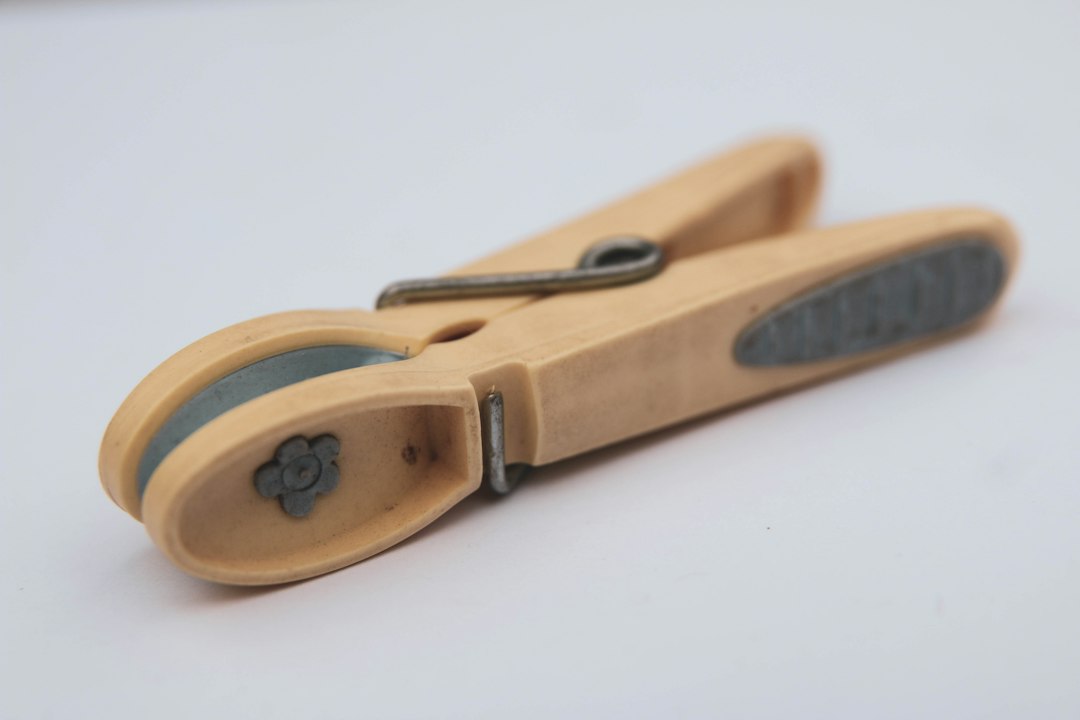
Walk onto any film set and ask a grip for a C-47, and they’ll hand you a wooden spring clothespin without hesitation. Ask for a clothespin, and you might get a confused look. This peculiar bit of film set terminology points to one of the industry’s most versatile and indispensable tools—an object so useful that it earned its own professional designation.
The Tool That Does Everything
The C-47 serves dozens of functions on a film set. Grips use them to attach gels and diffusion material to barn doors on lights, securing color filters without tape residue. They clamp loose cables to prevent tripping hazards. They hold scripts to camera rigs for quick reference. They pin back curtains for precise light control, attach markers to dolly tracks, secure reflectors to stands, and even hold sandwiches during rushed lunch breaks.
The wooden spring clothespin’s design makes it perfect for film work: it grips firmly without marring surfaces, withstands heat from lighting instruments better than plastic alternatives, costs almost nothing, and can be quickly repositioned without tools. On a typical feature film set, crews go through hundreds of C-47s, and veteran grips carry a personal stash the way carpenters keep favorite screwdrivers.
Origin of the Name
The most widely circulated explanation traces the name to military surplus culture in Hollywood’s post-war boom. After World War II, film studios bought wooden clothespins in bulk from military supply catalogs, where they appeared under mundane alphanumeric designations. The C-47 label supposedly came from one such catalog number, though no one has produced the actual document.
Another theory suggests the name emerged as insider jargon—a way for crew members to sound more technical and professional. Calling it a C-47 instead of a clothespin elevated a household item to specialized equipment, reinforcing the craftsmanship and expertise of below-the-line workers who transform everyday objects into filmmaking tools.
The Grip Department’s Language
The C-47 represents a broader pattern in film production terminology. Grips and electricians have developed an entire vocabulary that sounds technical but often describes simple tools and actions. A “furniture pad” is a moving blanket. “Stingers” are extension cords. “Silks” and “solids” are diffusion and blocking fabrics stretched on frames.
This specialized language serves practical purposes. It speeds communication on noisy sets where clarity matters. It signals professional competence—knowing the terminology means you know the work. And it creates a sense of craft identity in departments that work with their hands but rarely receive screen credit.
Why It Endures
Digital filmmaking has replaced many traditional tools. Film magazines gave way to memory cards. Tungsten lights yielded to LEDs. But the C-47 remains as essential as ever. LED panels still need gels attached. Cables still need securing. No technological advancement has improved on a wooden clothespin’s simple utility.
The term also endures because film sets remain fundamentally conservative environments when it comes to workflow. Crew members learn the language from veterans and pass it along to the next generation. Calling for a C-47 instead of a clothespin is part of professional initiation, a small but meaningful marker that you understand how film sets actually function.
The next time you see a beautifully lit scene with perfect color temperature, there’s a good chance a dozen C-47s are just outside the frame, holding everything together.