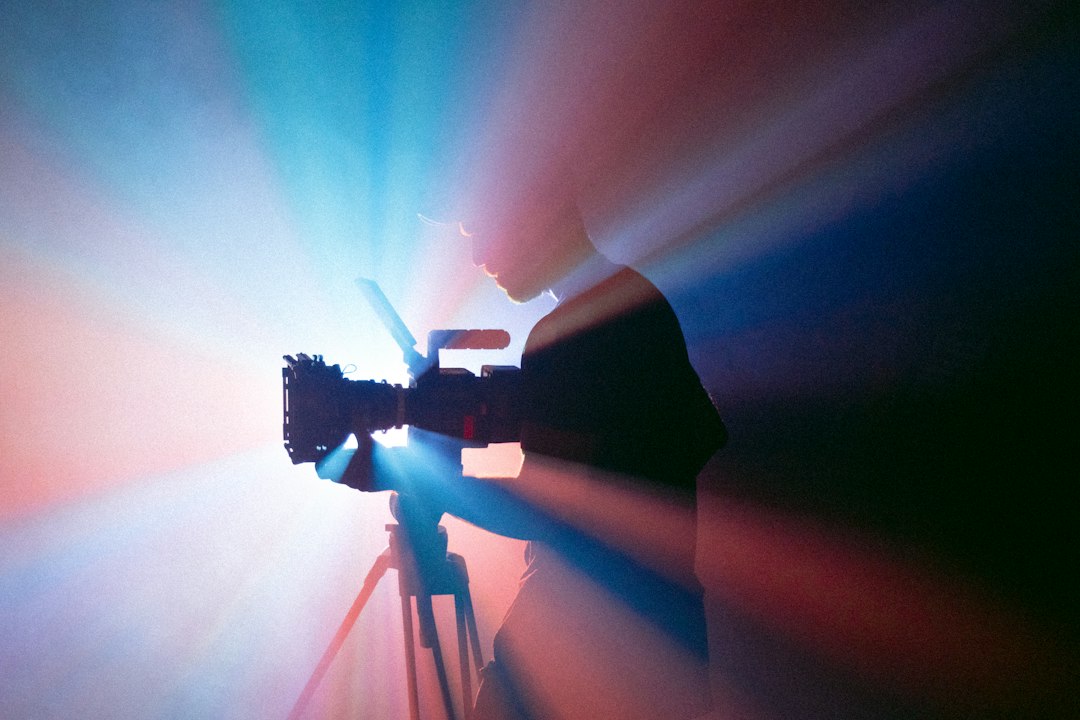
Photo by Jakob Owens on Unsplash
The 30-Degree Rule: Why Cuts Need Distance
When an editor cuts between two shots of the same subject, there’s an invisible threshold that separates a smooth transition from a distracting jolt. That threshold is the 30-degree rule: the principle that camera position should change by at least 30 degrees between successive shots of the same subject, or the cut will feel like a jarring bump rather than a deliberate shift in perspective.
The rule exists because of how our visual system processes continuity. When the camera angle changes by only a small amount—say, 10 or 15 degrees—the subject appears almost identical in framing and composition, but not quite. The result is a subtle jump that registers as a mistake rather than an intentional cut. The viewer’s brain expects either perfect continuity or a clear change in viewpoint, and a small angular shift falls into an uncomfortable middle ground.
Why 30 Degrees Works
The 30-degree threshold provides enough visual difference that the cut reads as a new perspective rather than an error. The subject’s position in the frame shifts noticeably, the background changes, and the sense of space updates. The cut feels motivated—like the editor chose to show you something from a fresh angle—rather than accidental.
This doesn’t mean every cut needs to be a dramatic swing around the subject. A modest move from a medium shot to a medium-close shot, as long as the camera has repositioned laterally or vertically by that 30-degree margin, will maintain smooth continuity. The rule is about angular change, not distance traveled. You can stay relatively close to the subject and still satisfy the guideline by adjusting your orbit.
When Editors Break It
Like most continuity rules, the 30-degree rule is broken deliberately when the violation serves a purpose. A series of small, incremental angle changes can create a creeping sense of unease or obsessive attention. Some editors use shallow-angle cuts to suggest surveillance, disorientation, or fractured perception—contexts where a jarring quality is the point.
Action sequences sometimes compress angle changes to maintain frenetic energy, prioritizing rhythm and impact over smooth spatial transitions. In these cases, the rapid pace and kinetic subject matter can absorb the slight jumps, or the filmmaker may be intentionally destabilizing the viewer’s sense of space to heighten chaos.
Shooting for the Cut
Directors and cinematographers plan for the 30-degree rule during production by capturing adequate coverage. When shooting a dialogue scene or a key moment, they’ll move the camera to distinctly different positions—not just nudge it slightly to the left. This gives the editor real options in the cutting room rather than a series of nearly identical angles that all feel like bad jump cuts.
The rule also intersects with shot size. Changing focal length or moving significantly closer or farther from the subject can sometimes compensate for a smaller angular shift, because the framing difference is pronounced enough to register as intentional. But relying on this workaround has limits—if the angle is too similar, even a dramatic zoom won’t fully mask the spatial bump.
The Invisible Craft
The 30-degree rule is one of those principles that works best when invisible. When followed, viewers simply experience a coherent flow of images. When violated unintentionally, they feel a nagging sense that something is off, even if they can’t name it. It’s a small geometric guideline with a large perceptual impact, quietly shaping how we move through cinematic space one cut at a time.