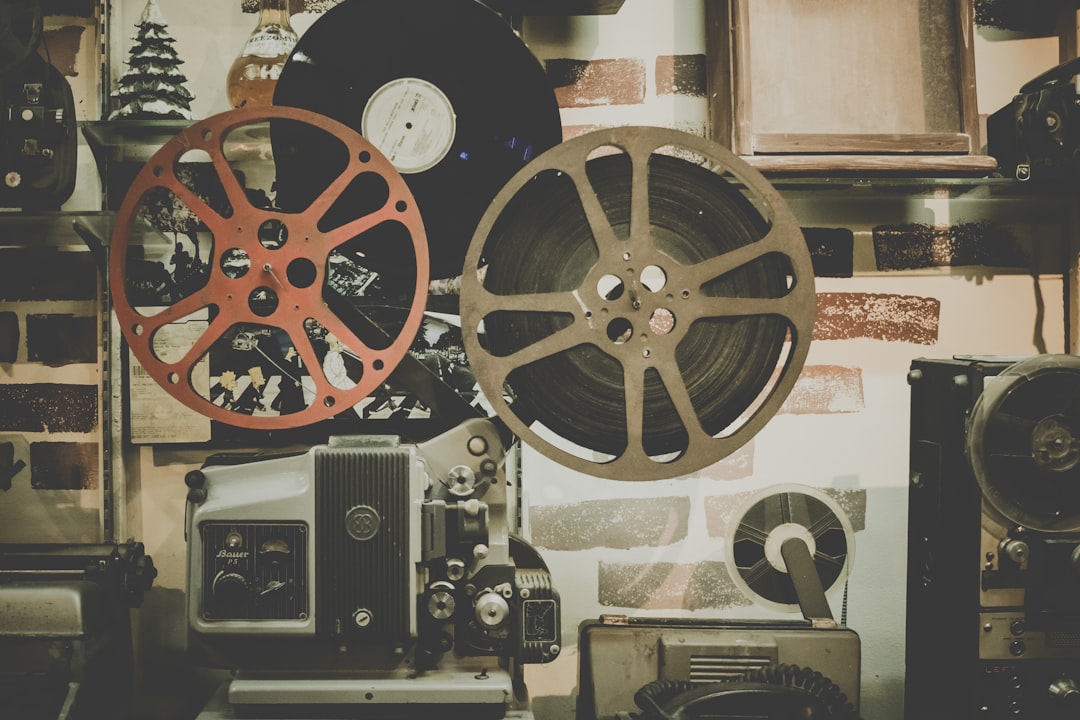
Photo by Noom Peerapong on Unsplash
Why Movies Run at 24 Frames Per Second
Every technical decision in cinema eventually gets treated as an aesthetic one, and no example proves that better than frame rate. Twenty-four frames per second is not some law of physics or perception. It’s a compromise from the 1920s that stuck around so long it became the definition of what movies are supposed to look like.
An Economic Compromise, Not a Creative Choice
In the silent era, frame rates were loose. Cameras were hand-cranked, projectionists adjusted speed on the fly, and anything between 16 and 24 fps was common depending on the film stock, the lighting, and even the mood a theater wanted to set. There was no audio to sync to, so nobody needed a fixed standard.
That changed with sound. Once studios started printing an optical soundtrack alongside the image, the film had to move through the projector at a constant, predictable speed, or the audio would drift and distort. Engineers needed the slowest speed that would still produce smooth motion and stable sound, because film stock was expensive and slower speeds meant using less of it per second of footage. Twenty-four landed in the sweet spot: fast enough to avoid visible flicker and choppy motion, slow enough to keep costs manageable. It was standardized industry-wide by the late 1920s and never seriously dislodged.
Why It Reads as “Cinematic”
Human vision doesn’t have a fixed frame rate, but it does have persistence of vision, the trick where the eye blends discrete images into continuous motion. At 24 fps, fast movement doesn’t fully resolve between frames, which produces a small amount of motion blur. That blur is doing more work than people realize. It softens motion just enough that panning shots, fight choreography, and camera moves feel fluid rather than stroboscopic, while still leaving each frame a little dreamlike, slightly removed from real-time perception.
That slight remove is exactly why audiences associate 24 fps with “movie” and higher frame rates with something else entirely.
The Soap Opera Effect
Television broadcast standards ended up faster than film, partly for technical reasons tied to electrical current and interlacing. Video shot at 30 or 60 fps renders motion with much less blur, and every frame is closer to a crisp, individual snapshot. That’s part of why soap operas, shot cheaply on video instead of film, developed such a distinct visual signature: hyper-smooth motion that reads as cheap or immediate rather than composed.
Modern TVs compound this with motion interpolation, generating synthetic in-between frames to smooth out 24 fps content for a higher native refresh rate. The result is the much-complained-about “soap opera effect,” where a big-budget film suddenly looks like it was shot on a home camcorder. The discomfort isn’t really about smoothness itself. It’s a learned association: smooth motion means cheap production, and blur means expensive, considered filmmaking.
The High Frame Rate Experiments
A handful of directors have pushed against 24 fps directly. The Hobbit trilogy was projected at 48 fps in select theaters, doubling the standard rate to reduce motion blur and strobing, especially useful given the film’s heavy use of 3D. Ang Lee went further with Gemini Man, shooting and projecting at 120 fps. Both drew the same reaction from a lot of viewers: the image looked strange, almost like behind-the-scenes footage or a live sports broadcast, despite being technically sharper and smoother than a standard theatrical release.
That reaction reveals how much of “cinematic” is convention rather than optics. There’s nothing physically superior about 24 fps. It’s simply the frame rate a century of filmmaking has trained audiences to read as fiction, as composed image rather than captured reality. High frame rate cinema may eventually find its footing, particularly for action and sports-adjacent genres where clarity matters more than atmosphere. But for now, the blur and imperfection of 24 fps remains, paradoxically, the thing that makes an image feel most like a movie.