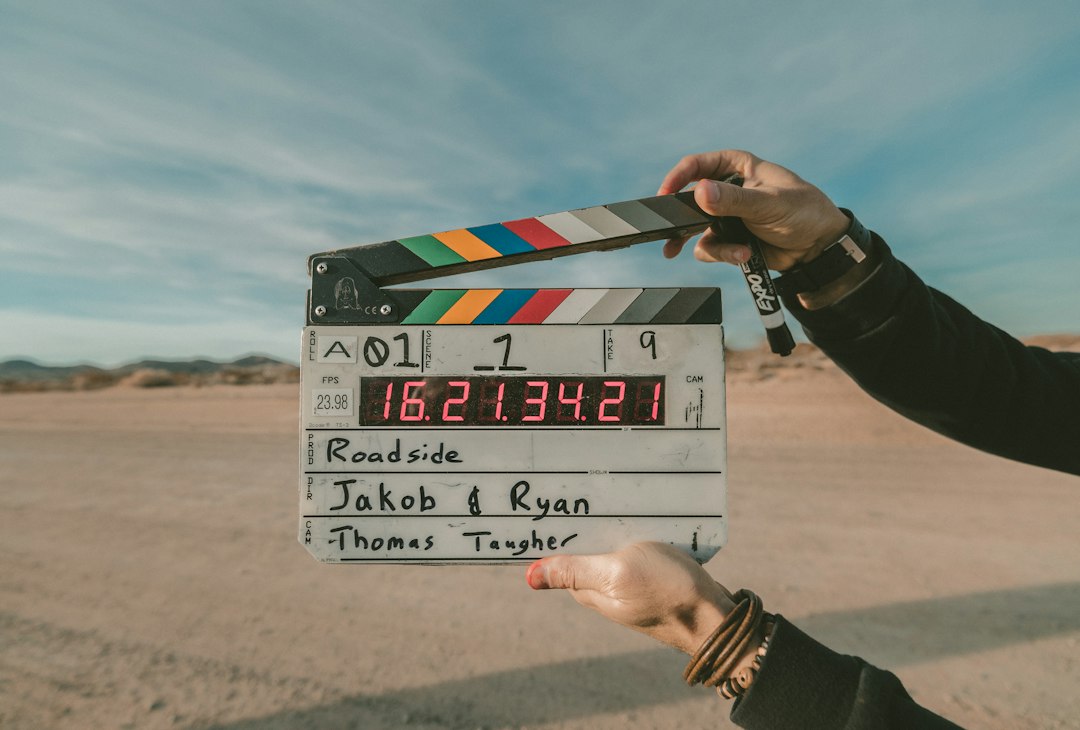
Photo by Jakob Owens on Unsplash
Why Films Are Shot at 24fps but Released at 23.976fps
If you’ve ever examined the technical specifications of a video file or a camera’s frame rate menu, you’ve probably encountered an oddly specific number: 23.976 frames per second. Not 24, which cinema has used for nearly a century, but a fractional value that seems designed to confuse. This isn’t a mistake or an arbitrary choice. It’s a historical artifact of television broadcast standards that has become the de facto standard for digital cinema delivery.
The NTSC Television Problem
The fractional frame rate traces back to the introduction of color television in the United States in the 1950s. The original black-and-white NTSC television standard ran at exactly 30 frames per second, synchronized to the 60 Hz electrical grid. When engineers added color information to the broadcast signal, they needed extra bandwidth within the same channel allocation. The solution was to slow the frame rate down by a factor of 1000/1001, resulting in 29.97 fps instead of 30.
This tiny adjustment created just enough room for the color subcarrier signal without causing interference with the audio channel. The change was small enough that existing black-and-white sets could still receive the signal, maintaining backward compatibility across millions of homes.
How 24fps Became 23.976fps
Film runs at 24 frames per second, but television in North America runs at approximately 30 fps. To transfer film to NTSC video, telecine machines used a process called 3:2 pulldown, which distributes 24 film frames across 60 interlaced video fields. This works mathematically, but only if the film is slowed down to match the television’s fractional rate.
When film is transferred at 23.976 fps instead of true 24, the resulting video plays at 29.97 fps, staying in perfect sync with the broadcast standard. The difference is imperceptible—a two-hour film runs just 3.6 seconds longer when slowed down—but it prevents audio drift and maintains frame-accurate synchronization throughout the program.
Why It Persists in Digital Workflows
Television broadcasts have largely moved away from NTSC, and digital cinema doesn’t require telecine transfer. Yet 23.976 fps remains the standard delivery frame rate for most narrative film and streaming content destined for North American and international markets.
The reason is ecosystem inertia. Broadcast infrastructure, post-production tools, encoding pipelines, and quality control systems were all built around 29.97 and 23.976. Changing to true 24 fps would introduce sync issues with legacy content, complicate conform workflows, and require recalibration across the entire distribution chain. It’s technically feasible, but the cost and risk outweigh the marginal benefit.
Even films shot at true 24 fps on digital cinema cameras are often conformed to 23.976 during post-production to ensure compatibility with television, streaming platforms, and Blu-ray authoring standards.
True 24fps Still Exists
Digital Cinema Packages (DCPs) shown in theaters often use true 24.000 fps, since theatrical projection systems aren’t tied to broadcast standards. Some international markets that never used NTSC, such as those using PAL or SECAM television systems, work at 25 fps for video and sometimes keep film at true 24 fps for cinema.
The fractional frame rate is largely a North American and streaming-platform standard, but because Hollywood content dominates global distribution, 23.976 has become a universal mastering format even in regions that never needed it.
The Hidden Math in Every Frame
Next time you export a timeline or check a file’s metadata, that strange decimal isn’t a rounding error. It’s a deliberate compromise born from the engineering constraints of analog color television, preserved because changing it would ripple through a century of content and infrastructure. Cinema may have been born at 24 fps, but in the digital age, it lives at 23.976.